Calzone Classico
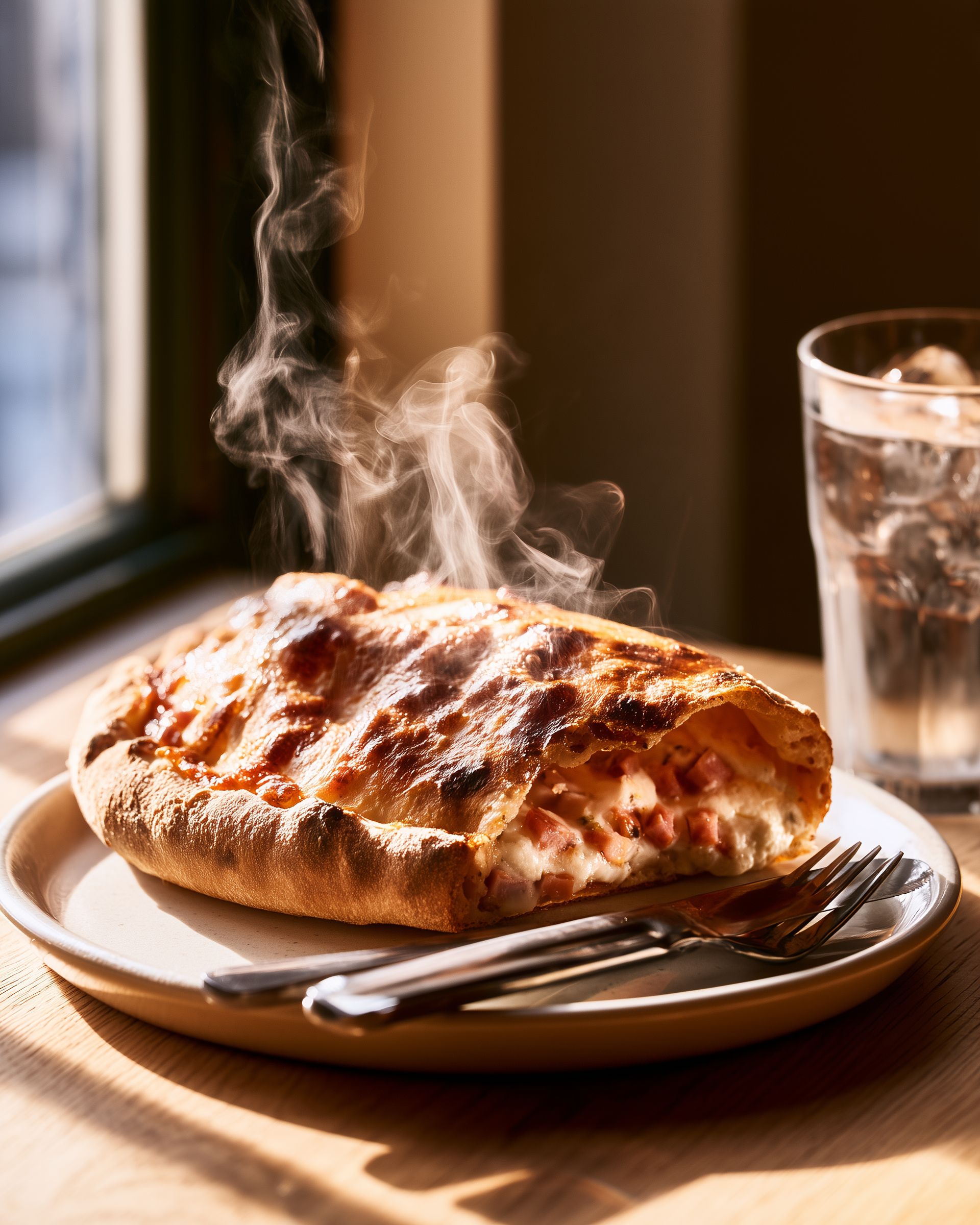
This is the one I ate more of than any other dish in this book, growing up -- folded shut, easy to eat standing at the pass with one hand, which mattered more to a kid underfoot in a working kitchen than almost anything else on the menu. It is, in the most literal sense, a pizza that learned to keep its guts to itself.
Ingredients
- 1 ball Impasto per Pizza a Lievitazione Lenta, risen and at room temperature
- 150g ricotta, well drained
- 100g fresh mozzarella (fior di latte), torn
- 60g prosciutto cotto (Italian cooked ham), chopped
- 20g Parmigiano Reggiano, finely grated
- A pinch of black pepper
- 1 egg, beaten (for the egg wash)
- Extra virgin olive oil
- Semolina or flour, for dusting
Makes one large calzone, enough for one hungry person or two reasonable ones.
Cookware Required
- la pietra o l'acciaio refrattario (pizza stone or steel)
- la pala per pizza (pizza peel)
- il pennello da cucina (pastry brush, for the egg wash)
Method
Heat your oven to 220°C (425°F), with a stone or heavy baking sheet inside if you have one. Resist the temptation to go any hotter, even if you have a dedicated pizza oven running at 700°F or beyond -- that kind of heat is exactly wrong for this dish. A calzone is far thicker than a flat pizza, with a filling that needs real time to warm all the way through, and an oven that hot will char the outside long before the inside has any chance to catch up. A standard kitchen oven, given the time below, does this dish far better than the oven that makes the pizzas in this chapter so good.
In a bowl, combine the ricotta, mozzarella, prosciutto, Parmigiano, and a pinch of black pepper. Stretch the dough into a circle a little larger than you would for a pizza, since half of it is about to fold over onto the other half.
Spoon the filling onto one half of the circle, leaving a clear border around the edge. Fold the other half over, and press the edges firmly together, then fold them over once more on themselves and crimp -- this second fold is what actually keeps the filling in; a single pinch is not enough. Brush the top with beaten egg.
Transfer to your peel, then to the hot stone, and bake until deeply golden all over, not merely on top -- a calzone this thick needs longer than a pizza, usually twelve to fifteen minutes at that moderate heat. Let it rest for a few minutes before cutting into it, or the filling will pour out rather than stay put.
Quando Va Storto
If the filling leaks out during baking, the seal wasn't crimped firmly enough, or the dough was stretched too thin at the edge to hold a proper fold; press harder next time than feels necessary. If the inside stays wet and underdone while the outside looks finished, it simply needed more time, or your oven was running a little cooler than 220°C; a pale calzone is an undercooked one, regardless of how the top looks. And if the crust burns or blackens before the inside is ready, the oven was too hot rather than not hot enough -- this is the one dish in this chapter where a pizza oven actively works against you; a standard kitchen oven, and patience, get you there instead.
Una Storia dalla Sala
A boy and girl who couldn't have been more than nineteen came in for what was, from every visible sign, a very early date, and ordered a single calzone to share, apparently out of nerves rather than economy. What followed was several minutes of whispered, increasingly serious negotiation over how to divide it fairly, conducted with the gravity most people reserve for dividing an inheritance. Word travels fast in a small kitchen, and most of us found some reason to pass the pass window more than once that evening.
They left holding hands, roughly two-thirds of the calzone gone and the rest abandoned in a way that looked much more like nervous forgetting than fullness. Rosa still asks, whenever a young couple orders one to share, whether it's "a Calzone Classico situation."